
Nicolas De Ro
-
 arXiv
arXiv:2607.12585, 2026.
arXiv
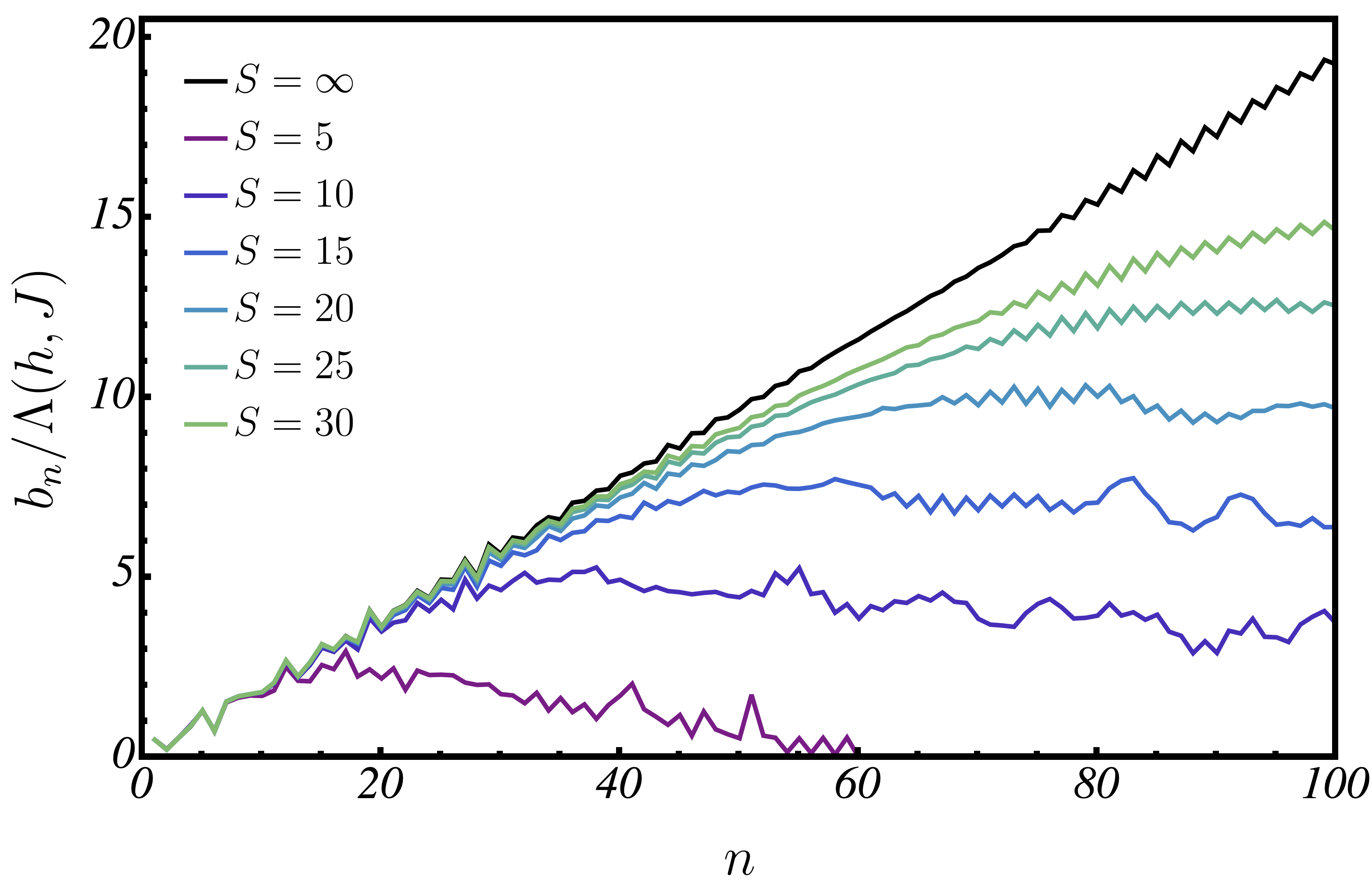
arXiv:2607.12585, 2026.How complex is a quantum system, and how can we compare the complexity of different systems? Krylov complexity has recently emerged as a simple and natural measure to answer these questions for the fundamental objects of quantum mechanics: states and operators. An operator is a mathematical instruction that transforms a quantum state or extracts physical information from it. As time passes, these operators evolve, revealing the system's underlying dynamical nature. By examining the interplay between a chosen operator and the system's total energy operator, the Hamiltonian, an abstract mathematical space known as the Krylov space can be constructed. Krylov complexity quantifies how an operator spreads through this space over time. A natural question is whether this framework can also be applied to non-quantum, classical systems. In this work, we extend the definition of Krylov complexity to classical mechanics and test it on a class of simple quantum systems involving spin degrees of freedom. These systems transition into classical behavior as their spin magnitude grows large. Despite their apparent simplicity, we demonstrate that the inherent symmetries of these systems strictly constrain the dimension of their quantum Krylov space. Finally, we also propose a more refined measure of Krylov complexity by analyzing it within restricted energy windows, at both the classical and quantum levels.
-
 Chaos
Chaos: An Interdisciplinary Journal of Nonlinear Science, 2026.
Chaos
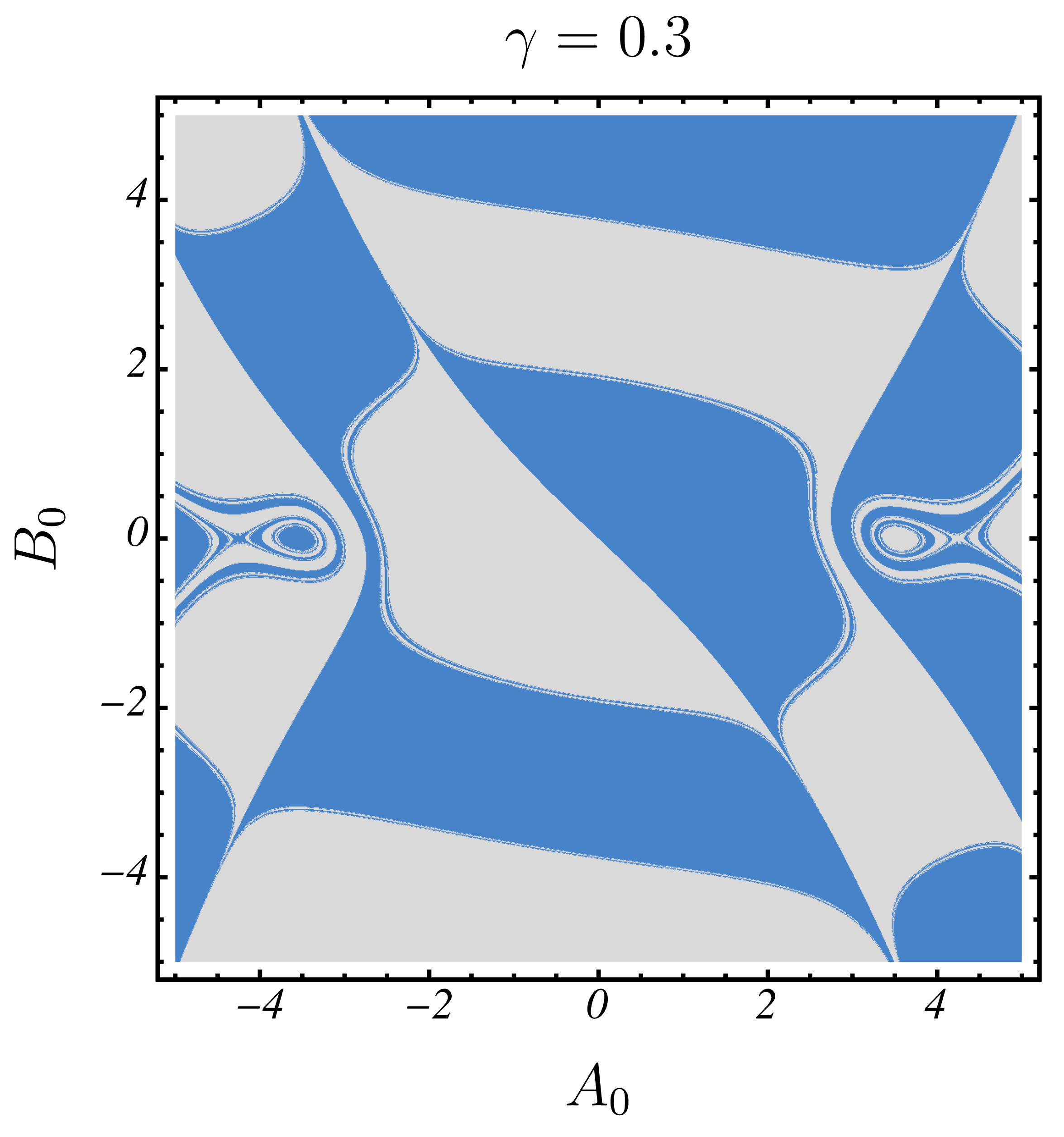
Chaos: An Interdisciplinary Journal of Nonlinear Science, 2026.The dynamics of Earth's atmosphere and oceans are governed by equations of motion derived from fundamental physical principles. Observations indicate that atmospheric and oceanic flows are generally time-dependent and highly variable. The emergence of such solutions through instabilities is an essential element of the understanding of large-scale motions. Baroclinic instability originates from the presence of a horizontal temperature gradient in a rotating fluid that is subject to vertical wind shear. The growth of these unstable waves generates storms and influences global atmospheric and ocean circulations. While studying the growth of these waves is a difficult task in the real Earth system, modeling the atmosphere or the ocean as two layers of stratified, rotating fluids offers an insightful framework for investigation, capturing the essential dynamics. Here, we use such a representation, originally proposed by Joseph Pedlosky, to explore the nonlinear growth of finite amplitude baroclinic waves, which exhibit deterministic chaos and other complex features as dissipation is introduced. This study revisits the two-layer model through the lens of modern analytical and numerical techniques allowing for a detailed description of the nature of the solutions generated by the system. Among the key findings, the presence of multiple coexisting attractors with intricate basin boundaries reveals an additional complexity of the system which renders the problem of forecasting much harder.
-
 thesis
Master's thesis, 2022.
thesis
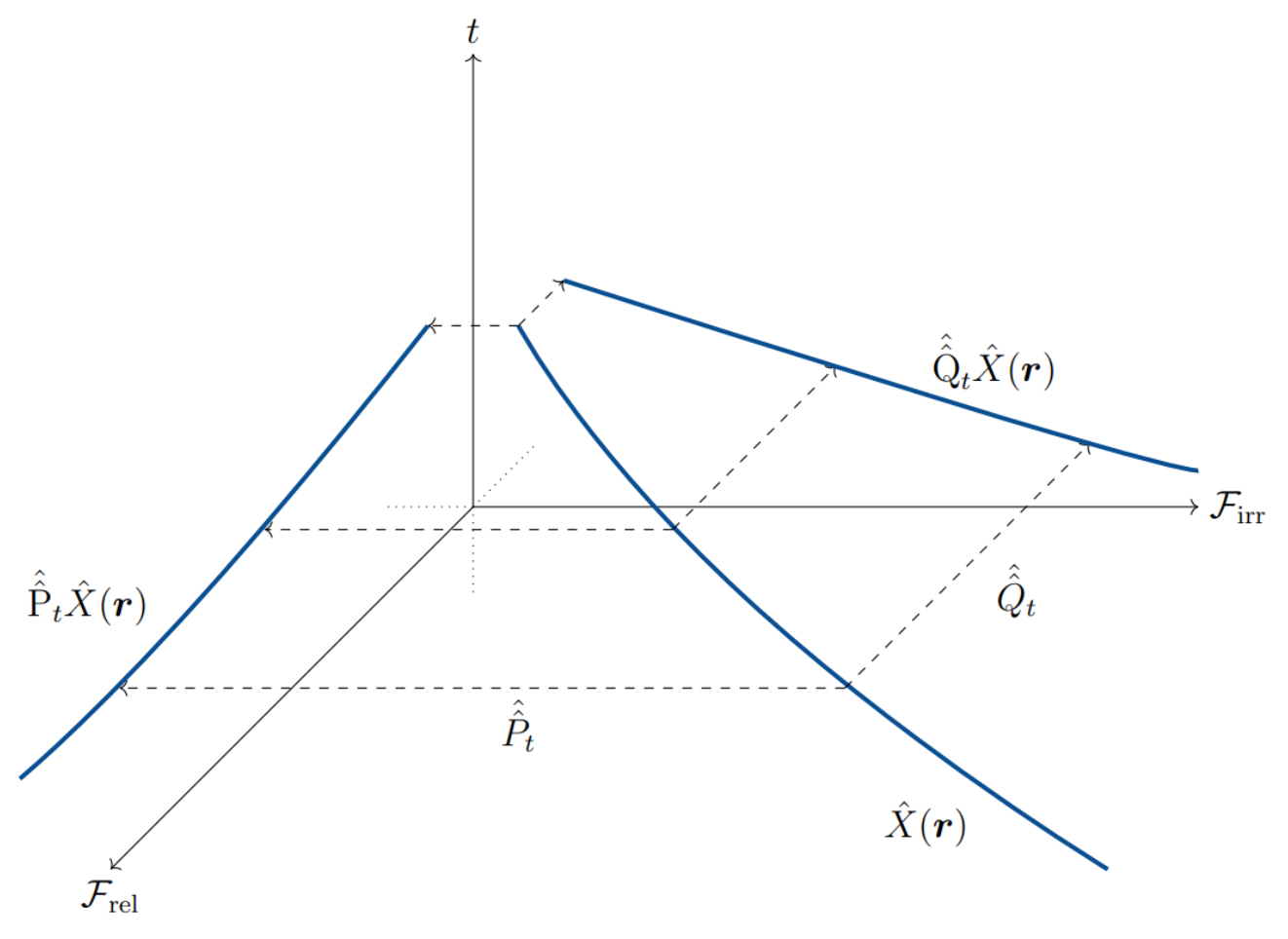
Master's thesis, 2022.From a wood stove warming a room in winter to a tea bag diffusing in hot water, our world is shaped by movement and change. Transport phenomena encompass the familiar idea that a variation of a thermodynamic quantity — such as temperature or particle density — drives a motion, or more strictly, a flow. A central question in physics is: What is the exact mathematical relation between these thermodynamic forces and the resulting flows? To a first approximation, this relationship is linear, defining what we call transport coefficients. These include known properties such as thermal conductivity, diffusion coefficient, and viscosity. While their definitions are well understood macroscopically, a deeper puzzle remains: Macroscopic transport processes are inherently dissipative, generating entropy and creating an irreversible "arrow of time." This contrasts sharply with the time-reversal symmetry of the microscopic laws of quantum mechanics. In this work, we derive the Green–Kubo formulas, which define these macroscopic transport coefficients directly in terms of microscopic quantities derived from quantum-mechanical first principles. To achieve this, we use the local equilibrium approach, describing a system that is globally out of equilibrium while remaining in thermodynamic equilibrium at every local point.
You can also find some of my master’s research and other academic work on my ResearchGate page, including material that is not strictly classified as a scientific publication.